
Velfac vs Rationel: Timber-Aluminium Windows Compared
Timber-aluminium composite windows — wood on the inside, aluminium cladding on the outside — have been a Scandinavian default for decades and have quietly picked up serious traction in UK new-build and conservation-sensitive projects. Two brands dominate the conversation: Velfac and Rationel.
We've spent time with both. Here's the honest side-by-side.
What "Timber-Aluminium" Actually Means
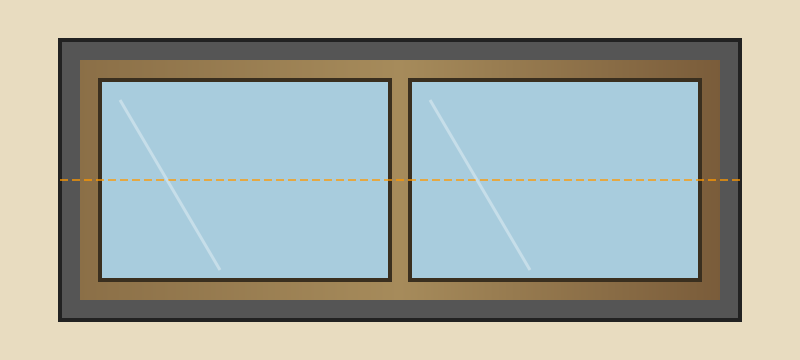
Composite construction: a solid timber inner frame is faced on the external side with an extruded aluminium profile. You get the interior warmth and finish of wood, the exterior durability and low-maintenance of aluminium.
Contrast with pure aluminium (see our Schuco AWS article): more thermally efficient than aluminium alone, but heavier, deeper frames, and different visual language.
Velfac: The Slim, Design-Forward Option
Velfac's signature product line (the Velfac 200 and its successors) is characterised by:
- Very slim aluminium exterior frame — often around 54 mm face width.
- Painted timber interior — typically pine, other options available.
- Large single fixed panes possible up to considerable dimensions.
- Clean, minimal design language.
The look is very architect-friendly. On a contemporary self-build or a modernist extension, Velfac units read beautifully. On a traditional Home Counties semi with lots of small windows, they can look slightly out of place.
Rationel: The Broader Range
Rationel offers a wider spectrum of styles including options that read more traditional, more sash-friendly, and better suited to period property renovations. Their Aura and Forma ranges cover different aesthetic angles.
- Timber interior with aluminium exterior.
- Ranges from contemporary to sash-look.
- Strong performance credentials for triple glazing.
- Slightly chunkier sightlines than Velfac on directly comparable products.
Head-to-Head
| Velfac | Rationel | |
|---|---|---|
| Slimmest frame | Very slim (~54mm) | Slim, slightly wider |
| Style flexibility | Contemporary only | Contemporary to traditional |
| Uw with triple glazing | ~0.9–1.1 | ~0.8–1.0 |
| Interior maintenance | Painted timber — occasional refresh | Painted timber — occasional refresh |
| UK availability | Established network | Established network |
Timber-Alu vs Pure Aluminium: When to Pick Which
Reasonable heuristic:
- Pick timber-alu (Velfac / Rationel): when interior look matters (visible wooden frames), when maximum thermal performance is required, or when a Scandinavian design language fits the project.
- Pick pure aluminium (Schuco, Cortizo): when interior colour needs to match a modern scheme in RAL, when the design language is industrial rather than natural, or when frame depth on the interior is a constraint.
Both are premium products. Neither is "the cheap option."
What About Timber-Alu Front Doors?
Both brands offer entrance doors alongside their windows. They're solid products but face-off directly against the aluminium options we cover in our Schuco front doors review. Choice comes down to whether you want warm wood on the interior face of your front door — a strong preference either way.
Local Availability
Both Velfac and Rationel work through authorised suppliers in the UK. For a Hertfordshire cross-shop that also puts these against aluminium options like Schuco, the premium range at 5EC is worth looking at. They cover Potters Bar, Barnet, Cuffley, Brookmans Park and South Mimms as standard territory.
Our Verdict
Velfac and Rationel are both excellent. If your project is contemporary and you want the slimmest possible frames, Velfac. If your project is a mixed period property and you want stylistic flexibility, Rationel. And if you want RAL colour matching, powder-coat consistency and installer network at the widest possible density, look back at pure aluminium in our Schuco AWS article and Cortizo vs Schuco comparison.
You genuinely can't make a bad choice among any of these — you can only pick the one that suits your project best.